

By:Robert Mutasi
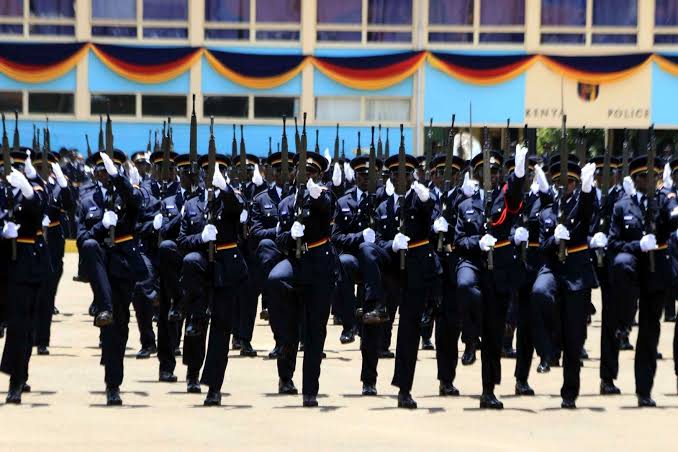
New police recruits and cadet officers have been put on notice to use social media responsibly or face disciplinary action as they transition from training colleges into mainstream policing.
National Police Service Spokesperson Muchiri Nyaga cautioned that irresponsible online behaviour can erode the dignity, safety and credibility of the Service, and warned that the Service will not tolerate officers who breach its social media policy.
Speaking on Friday during a lecture to 143 cadet officers undertaking the Promotion Course to Inspector of Police (IP) at the National Police College, Main Campus in Kiganjo, Nyaga delivered a session themed “Effective Communication as a Pillar of Professional Policing.”
The training, according to the NPS, aims to strengthen officers’ leadership, communication, and media engagement competencies — key pillars in building professionalism, accountability and public trust within the Service.
Nyaga warned officers against posting videos or photographs taken while in uniform or on duty on their personal social media accounts, saying such actions breach Service regulations and can compromise operational integrity and personal safety.
“Officers were encouraged to guide their juniors and model responsible online conduct,” the NPS said in a statement.
He reminded the recruits of the need to adhere strictly to the provisions of the National Police Service social media policy, which guides personnel on the use and regulation of social media platforms. The policy prohibits reckless and inappropriate use of social media to promote indiscipline, unethical acts and unapproved activities, either in official or personal capacity.
Violation of the policy, he warned, may cause officers to face the wrath of the law.
The NPS spokesperson also reaffirmed the need to adopt public relations to boost policing strategies and emphasized that effective communication is central to modern policing.
He noted that an officer’s tone, choice of words and conduct directly influence public confidence and cooperation, and underscored the importance of viewing the media as a partner rather than an adversary in advancing transparency and accountability.
Nyaga urged officers to ensure that all information shared with the public is verified and disseminated only through authorised channels, as stipulated in the National Police Service Act and Standing Orders.
He further challenged the cadets — many of whom will soon serve as Officers Commanding Stations (OCSs) — to embody professionalism and uphold the vision of Inspector General of Police Douglas Kanja, who has championed the transformation of police stations into centres of excellence anchored on integrity, efficiency and community partnership.
The lecture forms part of ongoing efforts by the National Police Service to promote ethical leadership and enhance professionalism across all levels of command, with similar training replicated in all colleges to catch new officers young and draw their attention to the doctrines, ethics and values critical to efficiency and service delivery.
