

By Teryani Mwadzaya
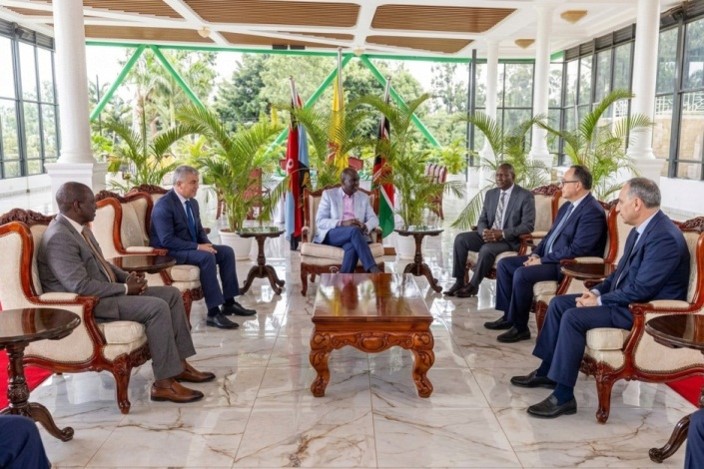
Diplomatic meeting hosted by President of Kenya Dr. William Samoei Ruto at State House, Nairobi, Director of Public
Prosecutions Office Mr. Renson Ingonga and Prosecutor General of Azerbaijan Mr. Kamran Aliyev.Photo Courtesy
By Teryani Mwadzaya
Kenya and Azerbaijan are expanding cooperation in education, with scholarships, technology support, youth innovation and skills development emerging as important components of a growing bilateral relationship between the two countries.
According to the Embassy of the Republic of Azerbaijan in Kenya, fully funded higher education grants are available to Kenyans under a scholarship programme named after Heydar Aliyev, the National Leader of Azerbaijan. The Embassy also identifies humanitarian initiatives supported by the Heydar Aliyev Foundation and the Azerbaijan International Development Agency (AIDA) as part of the expanding relationship between the two countries.
Rather than focusing exclusively on scholarships and conventional academic exchanges, the support has extended to Nairobi Secondary School pointing to an interest in strengthening access to equipment to support learning and digital skills.
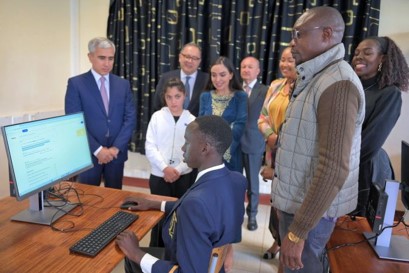
Ms. Leyla Aliyeva, Vice President of the Heydar Aliyev Foundation of Azerbaijan, visits Nairobi Secondary School in Kenya.Photo Courtesy.
According to the Embassy, AIDA has partnered with the Kenya Institute of Special Education (KISE) to establish a Youth and Innovation Hub. The Embassy presents the initiative as part of wider humanitarian cooperation involving Kenyan institutions.
The emerging Kenya-Azerbaijan education partnership comes at a time when Kenya is grappling with challenges around youth employment, skills development and the transition from education to work.
According to the World Bank, Kenya faces a significant youth employment challenge, with many young people working in informal and low-quality jobs that offer limited security or opportunities for advancement and identifies a mismatch between the skills young people acquire and those demanded by the labour market.
Moreover, the International Labour Organization (ILO) has also highlighted the pressure facing young Kenyans entering the labour market. In 2024, the ILO reported that Kenya’s Principal Secretary responsible for labour had cited a youth unemployment rate of 24.5 per cent among people aged 20 to 24.

According to ILO assessment 2025 employers in sectors including tourism continued to report difficulties finding workers with appropriate skills. The assessment identified gaps in areas such as customer service, foreign languages and digital marketing.
Kenya’s experience with youth employment programmes also suggests that skills training can have a measurable effect when it is connected to practical experience and economic opportunities.
The World Bank reports that the Kenya Youth Employment and Opportunities Project (KYEOP) reached more than 310,000 vulnerable young people, with interventions combining skills training, business support and employment opportunities. The Bank says 86 per cent of beneficiaries were in employment or self-employment after the interventions.

I seriously love your website.. Great colors & theme.
Did you create this site yourself? Please reply back as I’m trying to
create my own website and would like to learn where you got this from or what the theme is named.
Cheers!
Thank you, this is just our creation though.