

By:Betty Luke

Caroline Njeri never imagined she would one day own a hotel business. Today, the Bulapesa resident earns enough to feed her children three meals a day, pay their school fees and save part of her daily profits.
“I never had a job before. I survived on casual jobs,” she said. “On a good day I would make Sh500 profit, save Sh250 and use the rest to feed my children.”
Njeri is among beneficiaries of the Graduating Generations (GG) program that is helping extremely poor households with orphans and vulnerable children build sustainable livelihoods.
For Sophia Akiru, the programme came when she had lost hope. After losing her son, who was the family’s breadwinner leaving her to depend on neighbours for survival.
“I was on the verge of giving up. I used to beg neighbours for food. I now have a shop, I can feed myself and children without much strain,” she said.
She hopes to grow the business and ensure it is sustainable enough to continue supporting the family.
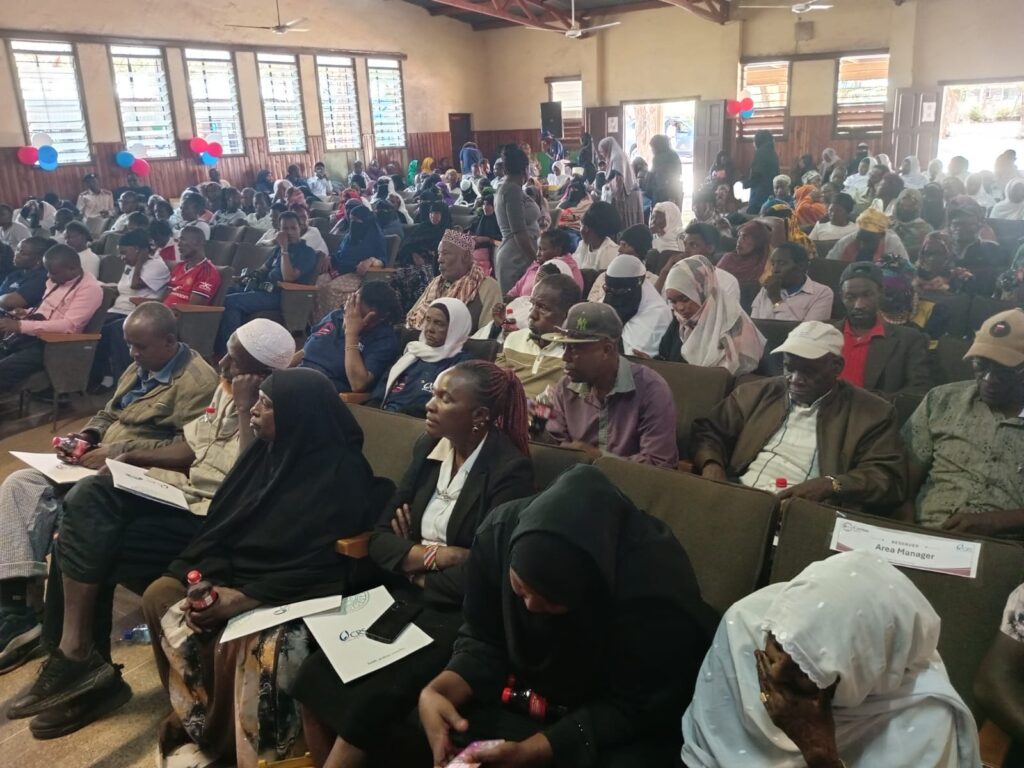
The two are among 750 households with orphans and vulnerable children targeted by the one-year Catholic Relief Services (CRS) funded initiative, targeting Isiolo’s Oldonyiro, Chari and Bulla Pesa wards.
Implemented by Caritas Isiolo in partnership with the County Government, the project seeks to support the most vulnerable families transition from dependence on aid to resilient livelihoods and sustainable well-being.
Each identified household receives a Sh24,000 livelihood grant and a Sh4,000 consumption support to cater for food during difficult periods, allowing beneficiaries to invest the business grant instead of using it for immediate household needs.
The project also assigns business mentors to help beneficiaries identify viable businesses, monitor enterprise growth and link them to financial institutions, with the best-performing businesses receiving an additional Sh5,000 top-up grant.
CRS Kenya Country Manager Margaret Kahiga said the initiative responds to Isiolo’s 53 per cent poverty rate, but acknowledged that many deserving families remain unreached.
“The need is much bigger than this programme. We are calling on other partners to come on board because the vulnerable households are many,” Kahiga said noting that the program was reinforcing the government’s Inua Jamii program.
Isiolo Deputy Governor James Lowasa said the county government will continue training beneficiaries on entrepreneurship and work with partners to connect them to financial institutions to expand their enterprises. He added that the county had finalized the Enterprise Fund Act, paving the way for youth, women and persons with disabilities to access affordable loans.
“The Enterprise Fund Act has been finalized. Soon youth, women and persons with disabilities will access low-interest loans to start and grow their businesses,” Lowasa said.
