

By:Robert Mutasi
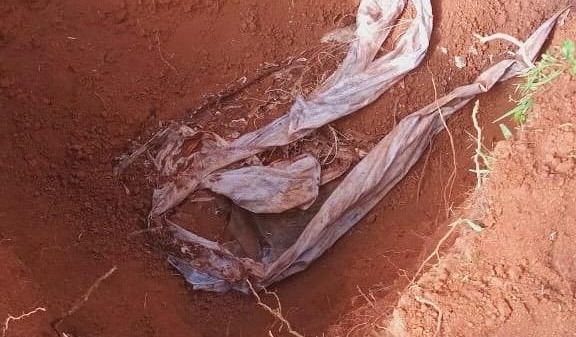
A section of leaders and residents in Uasin Gishu County has called on the national government to immediately suspend the ongoing exhumation of remains at the historic Eldoret Christian Cemetery, demanding transparency, proper public participation and the publication of legal documents authorizing the exercise.
The leaders, led by Uasin Gishu County Assembly Minority Leader and Huruma Ward MCA Kimani Wanjohi, said the cemetery, which is located behind the Kipchoge Keino Stadium, is facing threats from encroachment, vandalism and developments linked to the ongoing stadium works ahead of Mashujaa Day celebrations.
While noting that they support the ongoing construction of the Kipchoge Keino Stadium, which is expected to boost Eldoret’s sporting infrastructure and host major national events, Wanjohi said development should not come at the expense of the rights and dignity of families whose relatives are buried at the site.
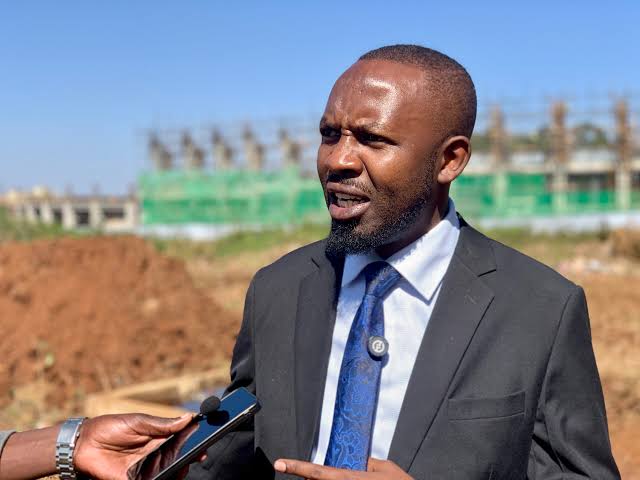
“We support the ongoing government construction of the Kipchoge Keino Stadium, but the law must not be suspended, especially where the remains of people buried at the Christian cemetery are concerned,” Wanjohi said while addressing the media at the cemetery.
He said it is saddening that a wall has been built around the area and plans are underway to exhume bodies without involving the public.
“It has been planned that the bodies buried here will be removed. For a fact our Kenyan laws are very clear that if one has to exhume a body there must be a court order giving clear information on how and why the exhumation is being done,” Wanjohi said.
According to Wanjohi, the government must come clean on the exercise and demonstrate that the process is being conducted within the law.
“We are asking the government to come clean on this exercise. There must be proper public participation, and the relevant court documents should be made available before bodies are exhumed. Families whose loved ones are buried here must also be engaged,” he said.
Wanjohi warned that failure to involve affected families could trigger legal action, saying they will seek a court order to stop the exhumation.
“If the families of the bereaved are not supported in moving the remains of their loved ones, we will seek a court order to that effect,” he said, adding, “Let the dead rest, let us not disturb them by exhuming their bodies. It should be a monument rather than being a field.”
The controversy has drawn renewed attention to the historical significance of the cemetery, which is associated with some of Eldoret’s early residents. Among those cited is Stephanus Petrus Ernest “Fanie” Kruger, documented as an Eldoret-area farmer, with the Kruger family long associated with the region.
The cemetery also has a documented place in Kenya’s legal history. A 1992 High Court judgment, Mjomba v Malilo, referred to remains of a woman who had been buried at the Eldoret Christian Cemetery, providing independent evidence of its existence decades ago.
Wanjohi also raised concerns over previous attempts to acquire the cemetery land.
“In the past, there have been attempts to grab this land. We hope that this land is not being grabbed under the pretext of the ongoing Kipchoge Keino Stadium construction,” he said, warning, “If you do not do justice, the spirit of those you disturb will haunt you.”
Caretakers echoed the concerns. Victor Mwanzali, who said he has worked at the cemetery for about eight years, called for dignity in the process.
“The dead and their families deserve justice. While we support the Kipchoge Keino Stadium construction, we urge that the families be considered. The family members did a lot in the process of burial and exhuming these bodies requires same dignity,” Mwanzali said.
Another caretaker, identified as Mbutupu alias Mkutuku, said the cemetery has been a source of livelihood.
“We have been getting some money from families of those buried here. We would use it for maintenance and even have titles on the gravesites. Once the burial site is demolished, what are we going to have? How will we feed our families?” he posed.
As construction progresses, leaders want the government to clarify which agency authorized the exhumations, whether statutory approvals were obtained, how families were notified, and what arrangements exist for respectful reburial.
