

The Pain, Persistence, and Triumph of a Pioneer
Great institutions are often born quietly, but their journeys are rarely easy. Behind their existence lie years of struggle, sacrifice, and perseverance. The story of The African Talent University (TATU) is one such story — a story that spans nearly two decades and reflects the courage of a pioneer who refused to abandon a vision that many did not initially understand.
At the center of this journey stands Prof. Humphrey Oborah, an educator, thinker, and visionary who believed that Africa needed a fundamentally different education system — one that recognizes and develops the natural abilities and talents inherent in every human being.
What began as an idea soon grew into a mission. But the path toward building Africa’s first Talent University would become a 20-year battle against resistance, misunderstanding, sabotage, and relentless opposition.
A Vision That Challenged the Status Quo
For many years, Prof. Oborah had been deeply troubled by the limitations of conventional education systems. Traditional models, he believed, measured intelligence too narrowly through standardized examinations while ignoring vast forms of human capability — creativity, practical intelligence, artistic expression, innovation, leadership, and entrepreneurial ability.
He developed a groundbreaking concept known as Talent Based Learning (TBL) using Modern Human Metrics Technology, an educational philosophy that combines biological, psychological, and social attributes to better understand how individuals learn and how their talents can be developed.
This philosophy became the foundation of DALC Education, the pioneering institution through which Prof. Oborah began implementing a talent-based approach to learning.
The vision was revolutionary: an education system where each learner’s natural ability would guide their educational pathway.
But revolutionary ideas often disrupt established systems — and disruption rarely comes without resistance.

When Innovation Meets Opposition
From the earliest stages of the movement, Prof. Oborah encountered intense skepticism and opposition. Many dismissed the ideas as unrealistic, while others simply did not understand them.
Yet over time, something remarkable happened.
Some of the same individuals who had initially discredited Prof. Oborah’s ideas began to recognize their potential. Instead of openly acknowledging the source of the innovation, however, elements of the philosophy began appearing elsewhere — particularly within Kenya’s emerging Competency-Based Curriculum (CBC), now evolving into Competency-Based Education (CBE).
Ironically, those who had once dismissed the ideas were now drawing from them.
Unfortunately, these ideas were often adopted without the full philosophical framework that underpinned Anthropo-Biometrics. As a result, many of the challenges currently facing the CBC/CBE system stem from attempts to implement fragments of the concept without the deeper scientific and pedagogical foundations originally proposed.
For Prof. Oborah, the situation was deeply painful. The individuals who were quietly adopting aspects of the philosophy were often the same individuals who had earlier worked to discredit the man who had developed them.
A Campaign of Discredit
The battle soon moved beyond intellectual disagreement.
Narratives began circulating that portrayed Prof. Oborah and DALC Education as illegitimate or fraudulent. Certain media outlets amplified these claims, while paid social media commentators continuously repeated negative stories designed to undermine public confidence.
At times, personal and family disputes were exploited in order to further damage the credibility of the institution.
The objective appeared clear: if DALC Education and its founder could be discredited, the original source of the ideas could be erased — allowing others to claim ownership of the emerging educational reforms.
For years, the broader public — unaware of the deeper context — came to view DALC Education with suspicion. The sustained negative publicity made it extremely difficult for Prof. Oborah to collaborate with universities, research institutions, or potential partners. It also placed him in frequent conflict with regulators and sections of the media.
The pioneer found himself fighting on multiple fronts at once.
Locking politicians out of elections and shaming industry CEOs

When Prof. Humphrey Oborah boldly advanced the idea that education should not be confined to grades—but should recognize lived experience, enterprise, and demonstrated capability—he challenged the very foundations of conventional academia. Through the DALC Education System, he opened doors for school dropouts, innovators, entrepreneurs, and professionals who had been excluded by rigid entry requirements, introducing Experiential Evaluation and Learning as early as 2004.
The response was swift and unforgiving.
Established universities dismissed the model as heretical. DALC was branded a “rogue institution,” and its graduates—many of whom were senior government officials and industry leaders—became targets of sustained public ridicule. Media platforms amplified the attacks. Online spaces turned hostile. Distinguished professionals were discredited, mocked, and stripped of dignity for having taken an alternative path to education.
For those who dared to seek elective office, the consequences were even more severe. Their qualifications were questioned, their credibility undermined, and in many cases, they were barred from participating in democratic processes. Careers were derailed. Reputations were deliberately tarnished. The cost of innovation became deeply personal.
Yet, in a striking turn of history, the very principles that were once condemned began to resurface—this time repackaged, institutionalized, and widely accepted. The concept of recognizing prior learning, once ridiculed, eventually found its place within national policy frameworks, culminating in formal structures such as the Kenya National Qualifications Authority (KNQA).
Ironically, some of the architects of this later acceptance were individuals who had once stood close to the original vision—or had witnessed it firsthand—before rising into positions of influence within government.
Today, the narrative is often retold without acknowledging the struggle that birthed it.

Acts of Sabotage
The obstacles were not limited to reputation alone.
One of the earliest physical manifestations of the vision — the first campus building established at Buoye, Nyamasaria in Kisumu — was vandalized while Prof. Oborah was away in the United States. The facility was broken into, property destroyed, and valuable equipment stolen.
For a developing institution with limited resources, the damage was devastating.
Yet the struggle did not end there.
When Prof. Oborah attempted to rebuild and move forward, another deeply disturbing event occurred. The Awasi Lands Office was burnt, making it extremely difficult for him to obtain the land title documents required by the Commission for University Education (CUE) to approve the university.
Without these documents, the regulatory process stalled. Years of planning and preparation were again delayed.
For many people, such obstacles would have ended the dream.
But pioneers rarely surrender their vision.
A New Wave of Smear Campaigns
Despite these challenges, Prof. Oborah persisted.
Gradually, progress resumed. The vision began attracting attention and support, including encouragement from national leaders such as H.E. Raila Odinga, the former Prime Minister of Kenya, who recognized the transformative potential of talent-based education.
However, just as the vision was beginning to gain momentum, another wave of misinformation surfaced. Following the passing of the late Prime Minister, H.E. Raila Odinga, some appeared to assume that the crucial support Prof. Oborah had received from him had vanished. Sensing what they believed to be a moment of vulnerability, efforts were renewed to discredit the initiative and weaken the progress that had been made.
Documents began circulating claiming that The African Talent University was falsely presenting itself as accredited.
In reality, the institution had consistently been presented as a proposed university, clearly stated on public billboards and communication materials. The university had not admitted students, advertised academic programmes, issued certificates, or graduated anyone under its name.
Yet the misinformation spread widely, creating confusion and once again slowing the progress of the project. However, these efforts ultimately proved futile. By this time, Prof. Oborah had grown wiser and more resilient through years of struggle. He skillfully outmaneuvered the attempts to derail the vision, standing firm even in the face of intimidation.
A Dream Delayed by Twenty Years
What might have taken a few years turned into a twenty-year struggle.
Two decades of resistance, accusations, bureaucratic obstacles, reputational attacks, and financial hardship stood between the vision and its realization.
But Prof. Oborah never abandoned the mission.
His conviction remained unshaken: Africa deserved an education system that recognizes and develops the full spectrum of human potential.
The Triumph of Perseverance
Today, the ideas that once faced ridicule are becoming global educational trends.
Around the world, institutions are moving toward:
- personalized learning pathways
- competency-based education
- experiential learning
- talent discovery and development
- innovation-driven education systems
Concepts that echo the very philosophy Prof. Oborah had championed decades earlier.
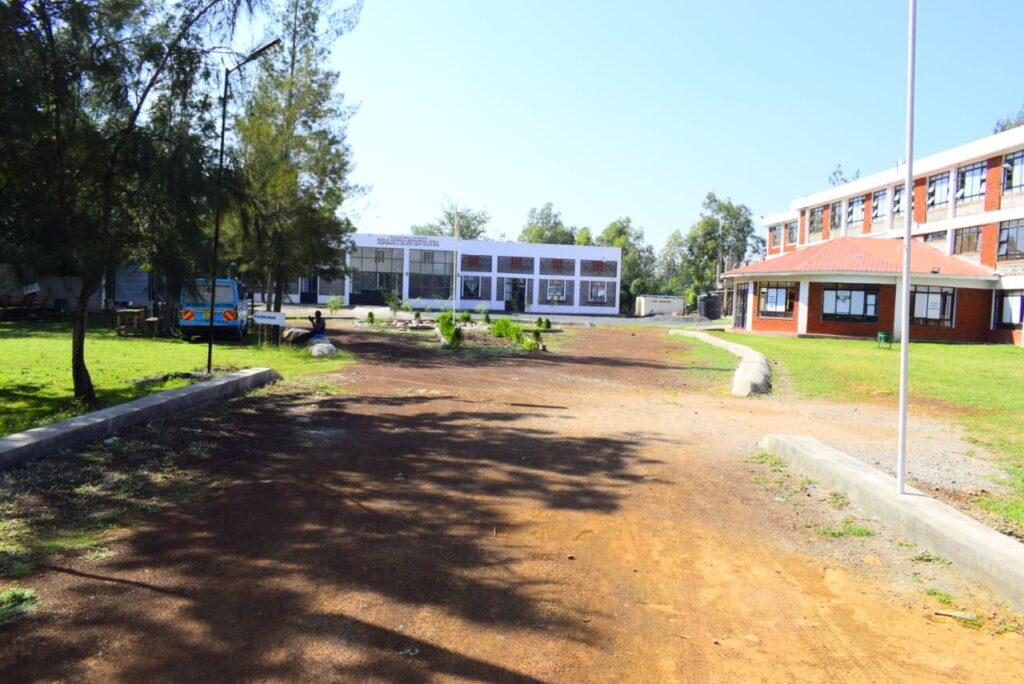
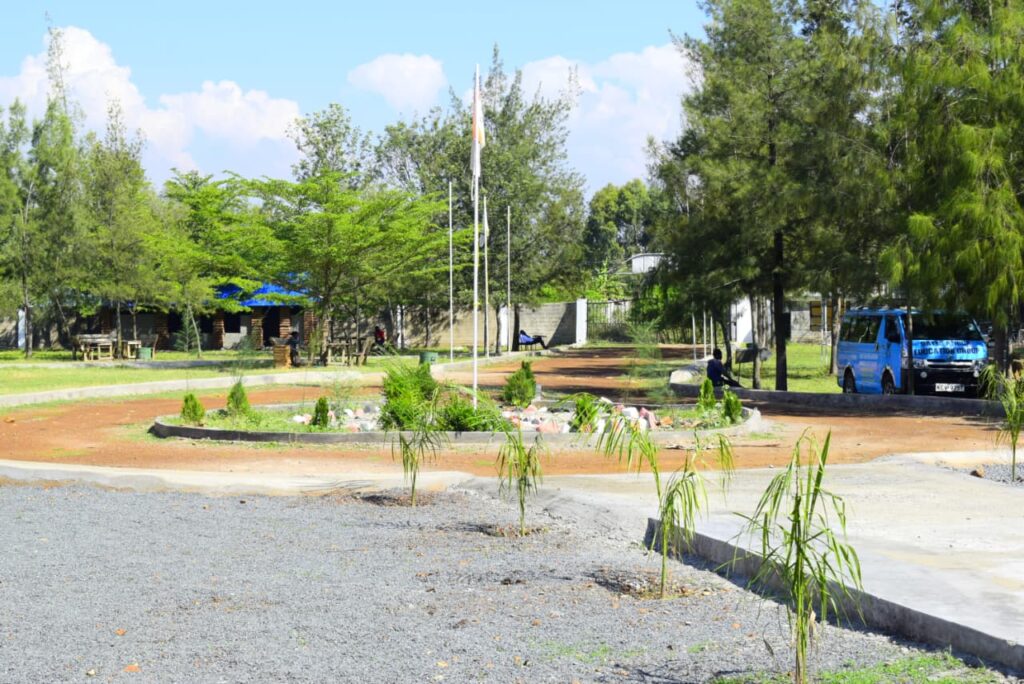
The African Talent University stands today as the culmination of that long struggle — a testament to persistence, courage, and belief in a vision greater than the obstacles that sought to stop it.
Today, that idea has finally been recognized. In a historic milestone for education in Africa, the Government of Kenya, through the Commission for University Education, has officially accredited The African Talent University (TATU) — marking the birth of the continent’s first university dedicated to Talent-Based Learning.
The Legacy of a Pioneer

The 20-year battle to build Africa’s first Talent University is not merely a story about one institution.
It is a story about the price that pioneers often pay when they challenge established systems.
Prof. Humphrey Oborah’s journey reminds us that transformative ideas rarely emerge without resistance. But history often vindicates those who persevere.
Today, The African Talent University stands as a symbol of that perseverance — a place where education is finally aligned with human potential.
The dream that once faced ridicule has survived.
And now, after twenty years of struggle, the vision of a talent-driven African education system is ready to shape the future.
