

By:Terryan Mwadzaya
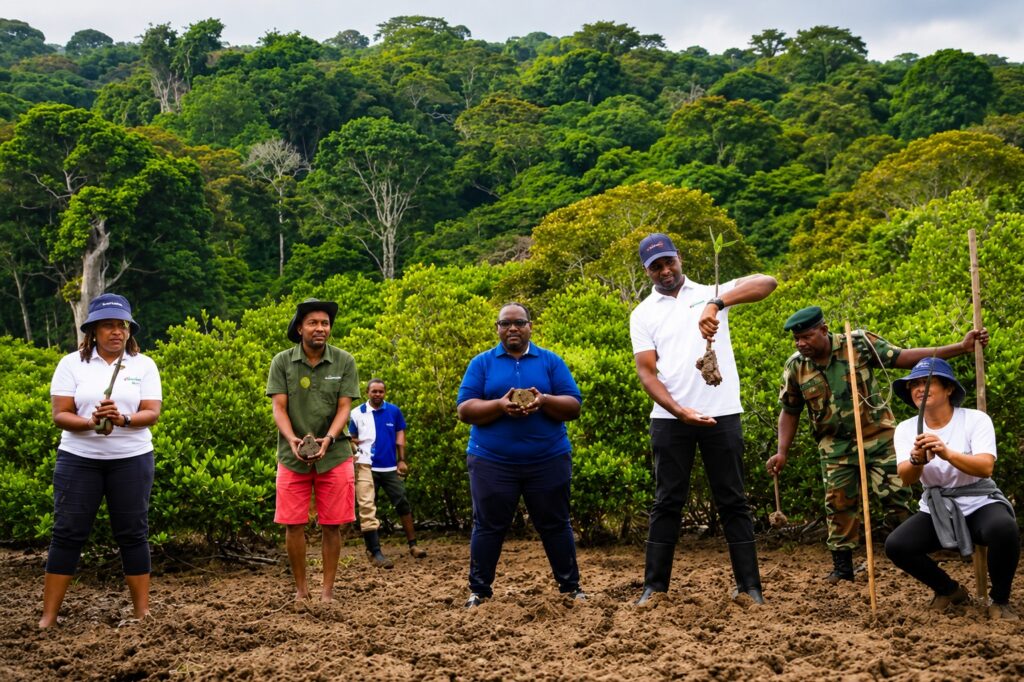
After years of trudging through thick mud to replant degraded coastline, residents of Mwamdudu in Kwale County say they have done their part for the environment — now they want conservation to pay.
Members of the Mwatsumbo Community Forest Association are calling on the national government, Kwale County government and private investors to help turn their restored mangrove forests into a sustainable ecotourism hub, arguing that long-term protection will only work if it improves household incomes.
The appeal was made during a mangrove planting exercise at the Tsunza Peninsula, one of Kenya’s most important coastal ecosystems.
Community members say the restored forest has completely transformed the area, reviving fish breeding grounds, stabilizing shorelines and capturing carbon. But without structured investment, they warn, the economic benefit will be lost.
Association chairman Juma Mashanga said the community had invested enormous volunteer labor in rehabilitating the ecosystem and now wants to establish community-led tourism activities such as guided nature walks, homestays, bird-watching tours and other environmentally friendly businesses.
“We have successfully restored the mangrove forest, but we now need investments that will allow the people who have safeguarded it to earn a living from conservation,” Mashanga said.
Mashanga noted that the Tsunza Peninsula is strategically located near major national infrastructure, including the Port of Mombasa, the Standard Gauge Railway (SGR) and the Dongo Kundu Special Economic Zone, making it ideal for low-impact tourism. Despite this advantage, the area has yet to realize its tourism potential.
He said ecotourism would provide alternative livelihoods, reduce pressure on forest resources for firewood and building materials, and give younger residents a reason to stay and protect the fragile ecosystem.
The community’s call came as 20,000 mangrove seedlings were planted through a partnership involving the I&M Foundation, Furaha and Baraka Farms, the Kenya Forest Service (KFS) and local conservation groups.
I&M Bank Group East Africa Regional Chief Executive Officer Kihara Maina said environmental conservation remains a core pillar of the foundation’s community investment, with nearly a third of its budget allocated to green programs. He said the organization had already achieved its annual target of planting one million trees in support of Kenya’s national goal to grow 15 billion trees by 2032.
Maina added that restoration projects create jobs beyond planting, including seedling production, nursery management and emerging ecotourism services.
Furaha and Baraka Farms CEO Daniel Mwero said the initiative now enables communities across the Tsunza Peninsula to plant about 250,000 trees each month, while creating local jobs and strengthening climate resilience.
Kwale County Conservator Elvis Fondo said Kwale has about 8,500 hectares of mangrove forest, with more than 2,000 hectares found within the Tsunza Peninsula alone, underscoring the need for cooperation between communities, government and private sector.
Under a Forest Management Agreement signed with KFS, the Mwatsumbo Community Forest Association committed to restoring 300 hectares of degraded mangroves between 2023 and 2028. Mashanga said the group has already rehabilitated 288 hectares and is on track to exceed its target ahead of schedule.
Restoring the forests, he said, required considerable sacrifice, with volunteers often carrying seedlings across deep mud to reach degraded sections.
Residents now say the focus must shift from restoration to returns — ensuring that the mangroves, which protect shores from erosion, provide breeding habitats for fish and store vast amounts of carbon, also sustain the people who saved them.
