


Urinary Tract infections UTI are on the rise in Kilifi affecting school going girls and their mothers. According to a Nurse Officer in Charge Kombeni Dispensary Saumu Munga, she attributes this to poor sanitation and hygiene that is complicated by water scarcity.
She says the homesteads in the rural areas use open latrines made up of palm leaves or sacks with stones placed in the middle.
She says the dry season registers increased cases of UTI attributing it to water scarcity as compared to the rainy season where many residents rely on collected rain water.
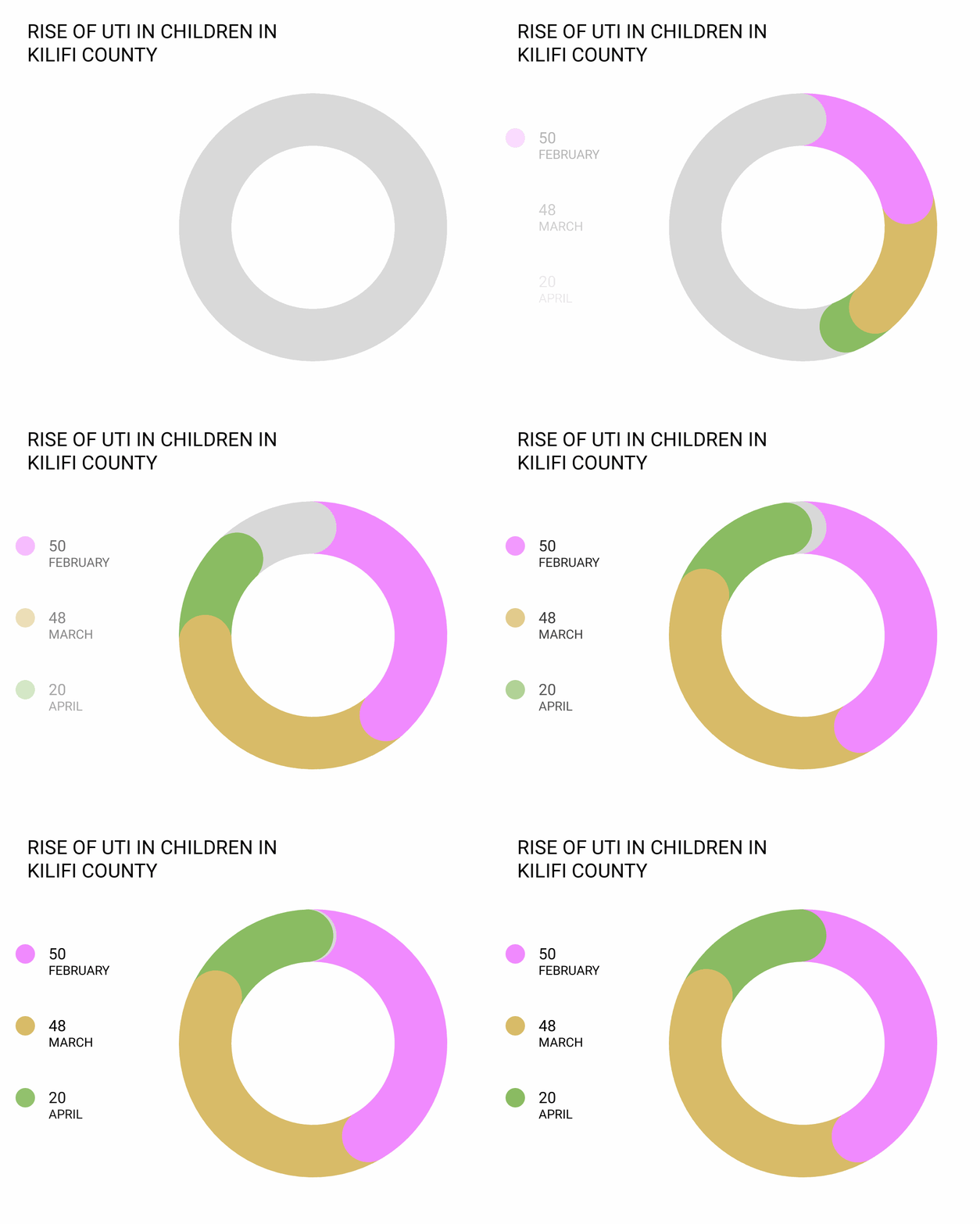
A health Survey of 2022 by Faith In Action reveals school going girls are unable to clean themselves properly (from front to back) due to inadequate water in the toilet facilities.
Official data from Kilifi County hospital indicate that 15 girls are treated for UTI’s monthly. The data shows that about 50 women transmit the UTI infections to their daughters while using the open toilets and the number is reportedly rising.
The social stigma surrounding Urinary Tract Infections (UTI’s) that links it to a sexually transmitted infection (STI’s) contributes to challenges regarding managing and treating the infection.
Dama Kenga from KIbateni in Rabai ,Kilifi County “not her real name , a pupil from Kilifi County and diagnosed with UTI was labelled a sex worker at school making her depressed and shy to seek medication.
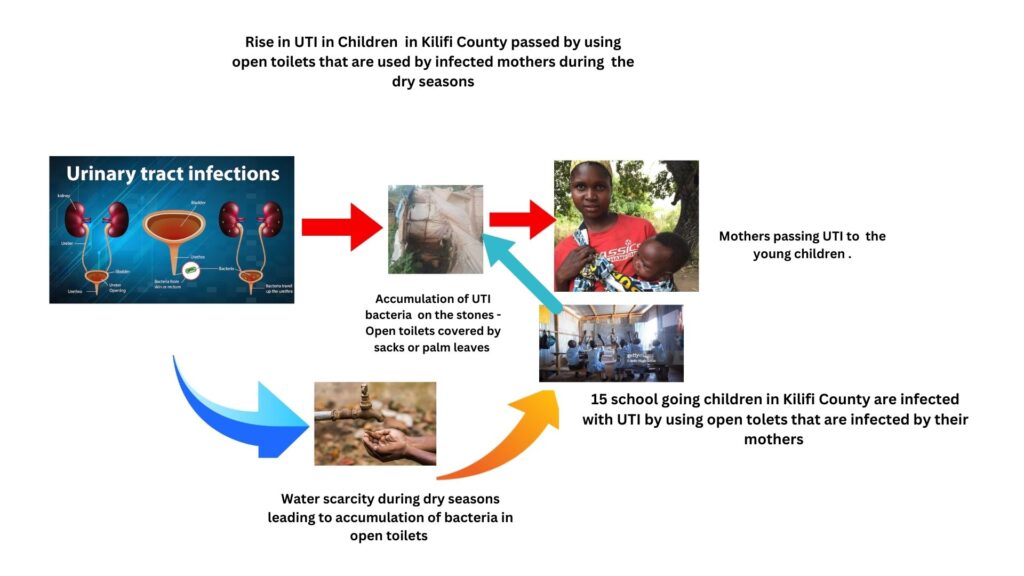
According to Kilifi County Hospital data, most of the homesteads have open latrines where girls are prone to contract infections from mothers who suffer from UTI.
At the same time, girls rarely seek treatment or testing when infected unless already suffering from another ailment.
The County of Kilifi is now prioritising mitigation of UTI in the rural areas. The county government has partnered with organisations to sensitise on proper hygiene in the face of scarce water resources to manage infections.
We have partnered with SATO an organization that fits affordable Indian type toilets that will enable less usage of water and maintain cleanliness. We are also enforcing proper sanitation to schools to enable a clean environment, “ Hassan Leli a county official explains.
The World Health Organization (WHO) Regional Director for Africa Dr.Matshidiso Moeti is asking African governments both at national and subnational and partners to invest in young scientists to offer health solutions.
“We had an innovation initiative in Africa launched several years ago. We discovered so much talent, innovation among young scientists that is untapped. We are supporting African Countries to develop their ecosystem for innovation so that the clever ideas of African experts can find traction, find financing and can be used as approaches to address health problems in the region.Dr Matshidiso Moeti
The World Health Organisation (WHO) confirms that Urinary tract infections (UTI) are a common cause of febrile illness in young children.
Due to lack of overt clinical features in children less than two years, appropriate collection of urine samples, and basic diagnostic tests at first level health facilities in developing countries, UTI are not generally reported as a cause of childhood morbidity.
UTI’s are not included in the current Integrated Management of Childhood Illness (IMCI) algorithm as the main focus has been preventing mortality and severe morbidity, by identifying children at risk of serious diseases including malaria, measles, meningitis, pneumonia, diarrhoeal diseases and malnutrition.
Organisations that support women led initiatives in Kilifi County are encouraging women to invest in water harvesting equipment as well as offering them entrepreneurial skills for start ups.
Rosemary Ndunge Kimeu, a mother of 3, says she can now harvest and store rainy water which helps in keeping her environment clean as her family uses sufficient water in the toilets and for other household chores.
“I am engaged in a women’s group and we were given business skills and through my savings I bought a tank and gutters that I now store rainy water. I do not have water shortage in my house anymore.”Rosemary Kimeu- Kilifi resident
