

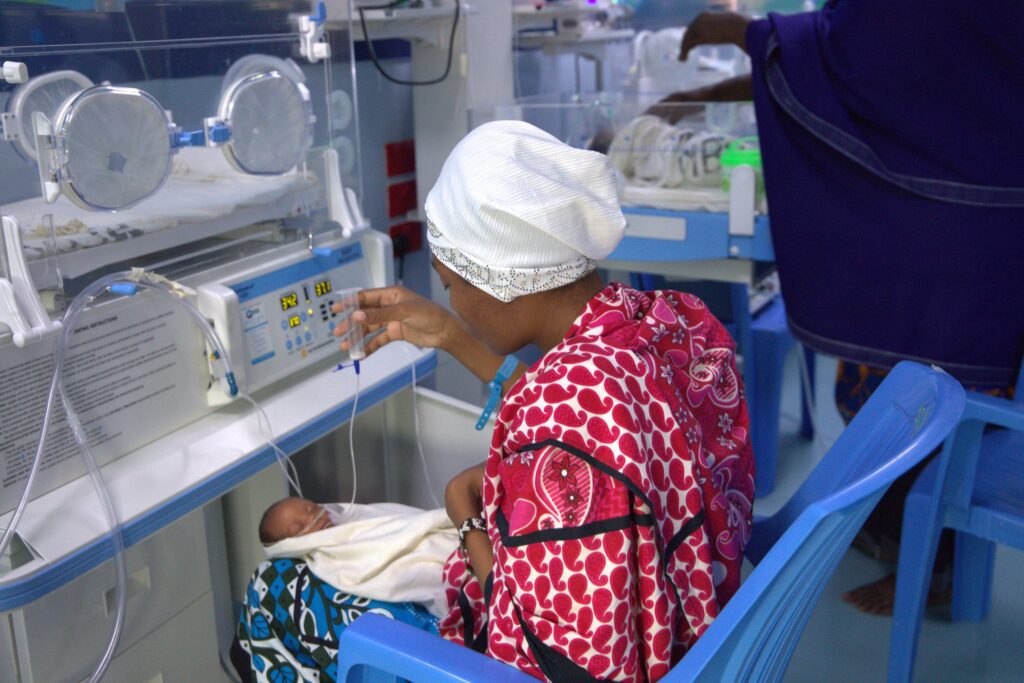
Mother feeds her baby inside an incubator in Msambweni Hospital in Kwale County.Photo Courtesy Teryani Mwadzaya
Kwale County’s celebrated campaign to detect and treat childhood heart disease has saved dozens of lives, but it has also exposed a dangerous policy gap as hundreds of children with undetected conditions are still sitting in classrooms with no medical records on file, education stakeholders in Mwavumbo warned.
The heart health initiative, saw county medics screen over 200 children and facilitate life-saving surgeries for those with congenital heart defects. Among them was 7-year-old Baraka from Mwereni, Mwavumbo Ward, who underwent successful surgery in March.But while Baraka’s heart was healed, his return to school revealed a new problem.
“When he came back to my ECDE class, I had no letter from the hospital. I didn’t know he can’t run or play football yet,” said Mrs. Mwaka, a teacher at Mkongani ECDE Centre.
Kenya’s Basic Education Act and CBC curriculum emphasize “holistic development,” but there is currently no law requiring routine health screening for learners before or during ECDE and primary school admission.Data from the Kwale screenings show 1 in every 40 children examined had a heart condition requiring intervention.Health officials estimate dozens more remain undetected in classrooms across the county.
“ The Ministry of Education teaches but there is no bridge between them,” said John Mwatsuma, a Mwavumbo Ward MCA aspirant and community health volunteer.We are sending sick children to learn, and teachers have no information to protect them.Even after free surgery, families face a “second crisis” keeping children in school.
Jane Nyadzua, Baraka’s mother, said she lost two months of income nursing him at Coast General Hospital.
“The surgery was free. But I had to sell two goats to pay for transport and food in Mombasa. Now I have no fees for his Term 2. His sister dropped out of Form 1 so we could afford his clinic visits.”
A review of the Kwale County Integrated Development Plan 2023-2027 shows the Health Department has a budget for “referral surgeries” and the Education Department has bursaries for “needy students.” However, there is no budget line for learners with chronic illnesses* to cover transport, remedial tuition, or guardian stipends during hospitalization.
On Monday, Mwatsuma presented a draft “Mwavumbo School Health Policy Brief” to the Sub-County Education Office, demanding mandatory Screening Annual heart, vision, and hearing checks for all ECDE learners, with results filed at the school,Afya Shuleni” Form which is a mandatory hospital-to-school discharge form stating a child’s physical activity limits after treatment and School Health Continuity Fund and Development Funds to cover transport, remedial classes, and guardian support for learners with chronic conditions.
“You cannot heal a child and then let poverty kill their education,” Mwatsuma said. “For 3,000 shillings to pay for a boda to clinic, we lose a future teacher, a future doctor. That is bad economics.”
Kwale County Health CEC Dr. Francis Gwama confirmed the screenings but said education policy falls under the national government and County Education Department.
“We have shared our findings with Ministry .We support any policy that protects children,” Dr. Gwama said by phone. He could not confirm if a budget exists for post-treatment education support.
Kwale County Education Director Anne Kwekwe had not responded to requests for comment by press time.
Mwatsuma said he will table a motion before the Kwale County Assembly if elected, and is now mobilizing parents to petition the Assembly.
“Baraka is back in class. He wants to be a pilot,” said Mrs. Mwaka.But dreams need more than surgery. They need a system that doesn’t forget you after the hospital gate.”
