
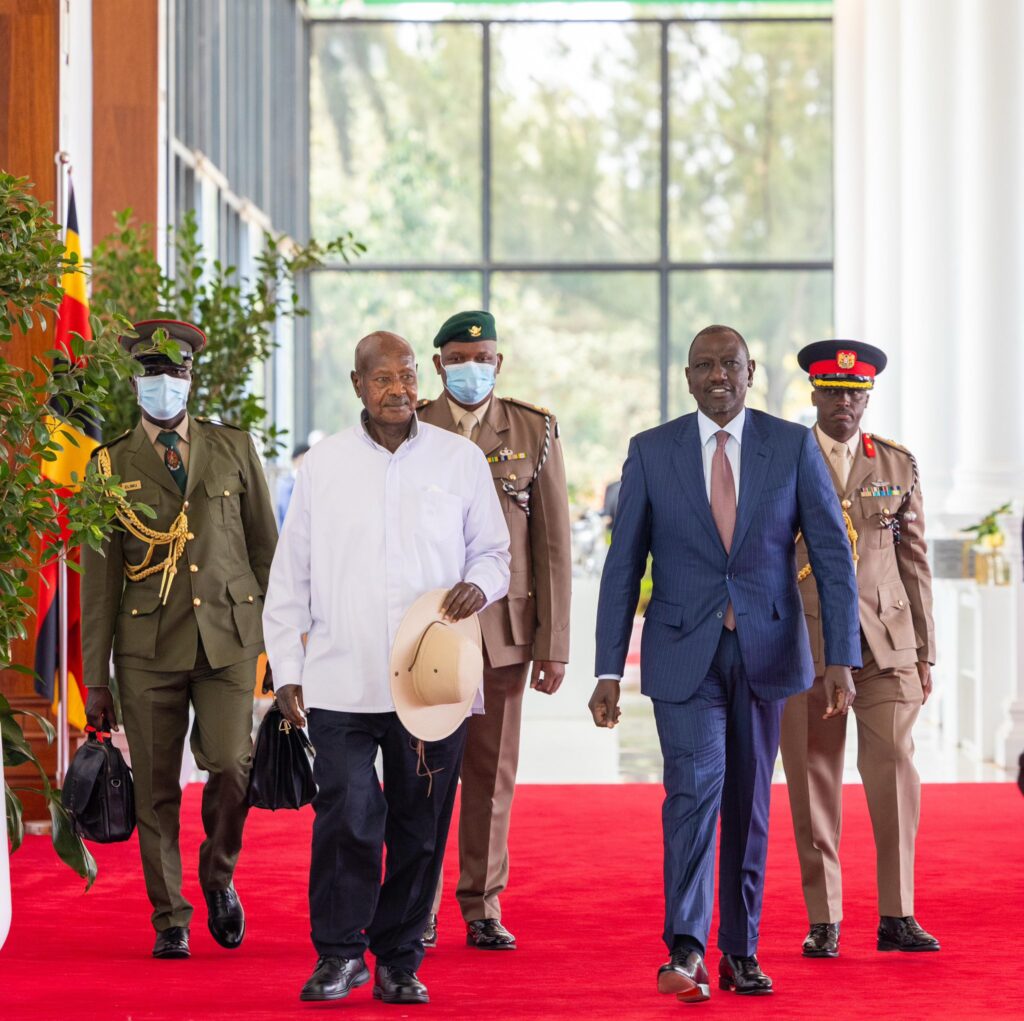
Kenya and Uganda have signed eight new bilateral trade agreements, elevating their total number of such pacts to 25. The agreements were inked during a high-profile meeting between Kenyan President William Ruto and Ugandan President Yoweri Museveni at State House in Nairobi, underscoring a renewed commitment to regional cooperation and infrastructure development.
The newly ratified deals involves critical sectors such as trade, transport, and electricity, with the aim of enhancing logistics and infrastructure along shared economic corridors. This development is part of a broader strategy to strengthen the economic fabric of the East African Community (EAC) and the Great Lakes region, capitalizing on the synergies between the two nations’ economies.
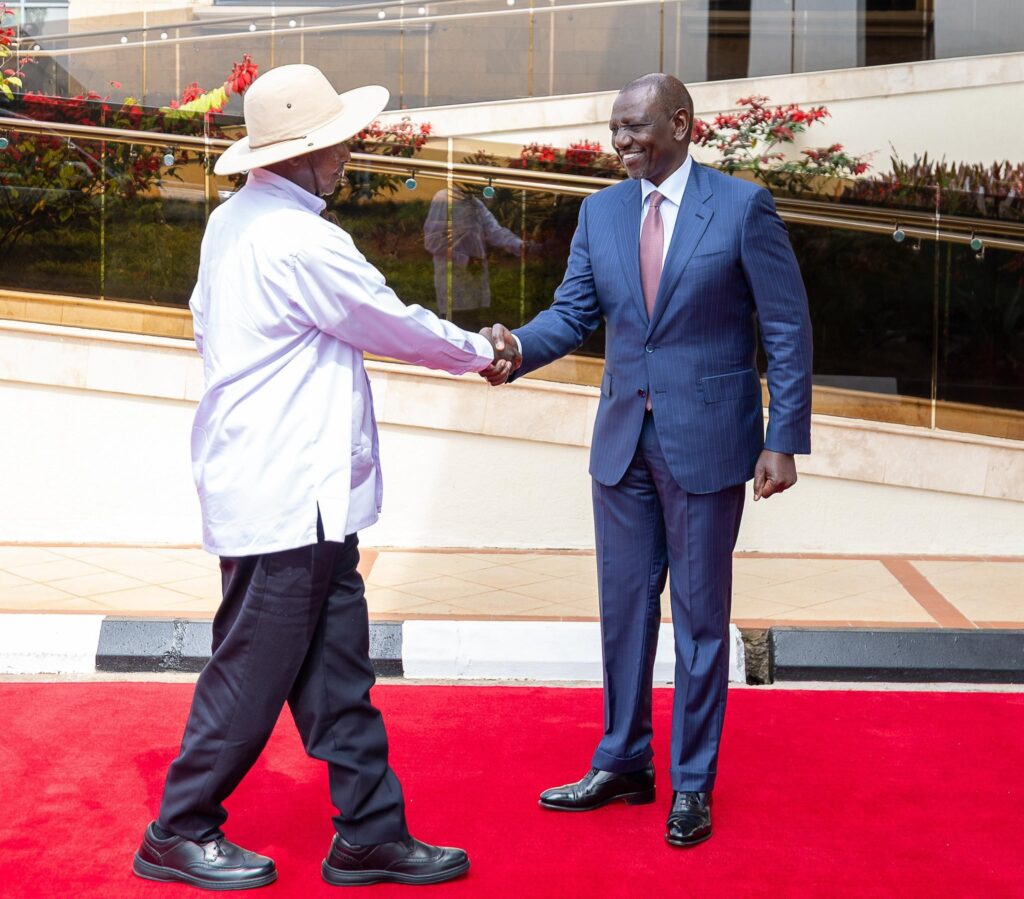
President Ruto highlighted the strategic significance of these agreements, noting, “We are set to commence the Standard Gauge Railway (SGR) extension to Uganda by the end of this year, a project that will revolutionize our transport infrastructure and facilitate seamless movement of goods and people.” The SGR extension is a key component of the ambitious Lamu Port and Lamu-Southern Sudan-Ethiopia Transport Corridor (LAPSSET) project, designed to connect Kenya’s railway network to Uganda and extend further to South Sudan, the Democratic Republic of the Congo, Rwanda, and Burundi.
Additionally, the leaders discussed the impending launch of the Nairobi-Nakuru-Malaba Highway dualling project, scheduled for the end of 2024. President Ruto announced that this initiative will create a more efficient and effective transport network, stating, “This highway will be a game-changer, ensuring smooth movement of goods across our nations and beyond, thereby strengthening our economic corridor.”
The signing of these agreements occurs against a backdrop of dynamic regional interactions, including recent tensions with Tanzania over business restrictions, which illustrate the competitive yet interdependent nature of East African economic relations. However, the Kenya-Uganda pact signals a preference for collaboration, with both leaders expressing confidence in the potential for mutual prosperity.
President Museveni emphasized the broader implications of these agreements. “These pacts are not merely about trade; they are about forging a future where our regions can flourish together,” he said, reflecting on the long-term vision for regional integration.
The context of these developments is further informed by Kenya’s active participation in the EAC and the African Continental Free Trade Area (AfCFTA), which are driving a strategic shift towards regional value chains. This shift is a response to global challenges such as the COVID-19 pandemic and climate change, prompting a reevaluation of trade priorities in East Africa, as noted in recent analyses by the Brookings Institution.
As Kenya and Uganda move forward, the focus will be on the implementation of these agreements and the tangible benefits they promise to deliver. The SGR extension and highway dualling projects are anticipated to reduce transportation costs, improve market access, and stimulate economic activity across the region.
