
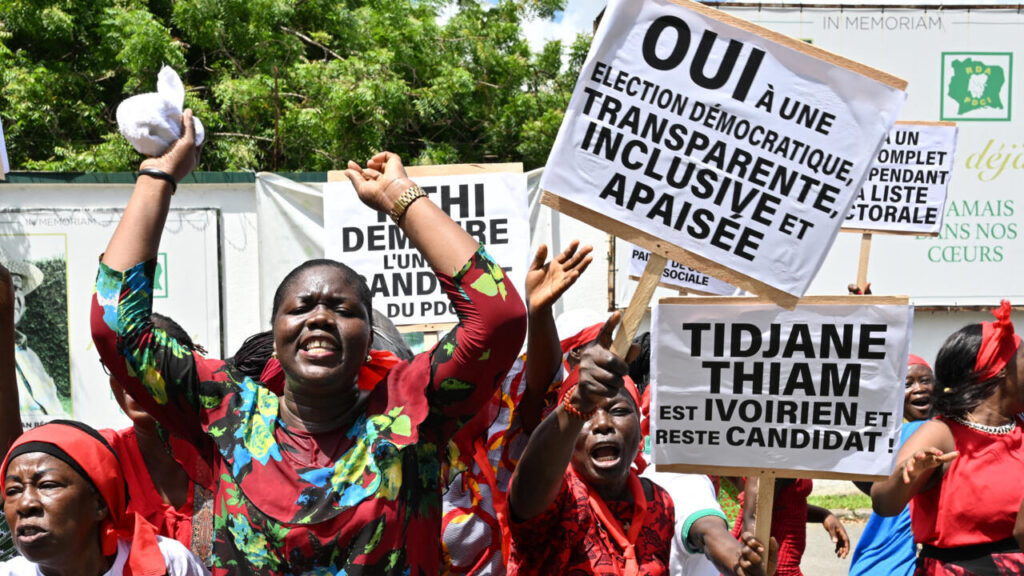
Ivory Coast is grappling with escalating political unrest as the October 2025 presidential election approaches, with the disqualification of opposition leader Tidjane Thiam igniting protests and fears of violence. The decision to bar Thiam, a prominent figure in the Democratic Party of Ivory Coast (PDCI) and former Credit Suisse CEO, has intensified concerns about the fairness of the electoral process in this West African nation, a global leader in cocoa production.
On April 22, an Abidjan court ruled that Thiam was ineligible to run due to his dual French-Ivorian nationality, despite his renunciation of French citizenship earlier this year. The court’s decision, which cited Thiam’s acquisition of French citizenship in 1987 as grounds for losing his Ivorian nationality, is final and cannot be appealed. Thiam, who returned to Ivory Coast in 2022 after a distinguished international career, condemned the ruling as a politically motivated attempt to suppress opposition voices. “This is a clear effort to undermine democracy,” Thiam told supporters, vowing to continue his campaign through legal and public means.
The PDCI responded by calling for nationwide protests, but a demonstration on April 24 drew limited turnout, with only a few hundred participants due to strict government restrictions on public gatherings. Government spokesman Amadou Coulibaly warned that “any attempts to disrupt public order will be met with decisive action,” signaling a hardline approach to dissent. The exclusion of Thiam follows a pattern of sidelining opposition figures, including former President Laurent Gbagbo and former Prime Minister Guillaume Soro, both disqualified due to prior convictions.
Ivory Coast’s history of electoral violence casts a long shadow over the current tensions. The 2010 election dispute, which saw then-President Gbagbo refuse to concede defeat, led to a civil war that killed over 3,000 people. With President Alassane Ouattara, now 83, remaining ambiguous about seeking a fourth term, speculation is rife about his intentions. Ouattara, who has led Ivory Coast since 2011 and overseen significant economic growth, has hinted at continuing his leadership, further fueling opposition discontent.
Compounding the unease, unverified rumors of a coup attempt circulated on social media platforms like X on May 21, alleging military action and an internet shutdown in Abidjan. These claims, which suggested Ouattara had fled to France, lack confirmation from credible sources and appear to be speculative. However, their spread highlights the fragile political climate and public anxiety as the election nears.
Analysts warn that the exclusion of key opposition candidates risks destabilizing Ivory Coast, which has worked to rebuild stability since the conflicts of the early 2000s. The nation’s economy, a regional powerhouse, faces additional pressure from global economic challenges, with the African Development Bank recently lowering Africa’s growth forecast during a meeting in Abidjan. The bank’s own leadership transition, amid U.S. funding cuts, adds to the broader context of uncertainty.
The PDCI has vowed to escalate protests in June, demanding a transparent electoral process. International observers, including regional bodies, are urging dialogue to prevent a repeat of past violence. As Ivory Coast navigates this critical juncture, the coming months will test its commitment to democratic principles and its ability to maintain peace in the face of mounting political divisions.
